
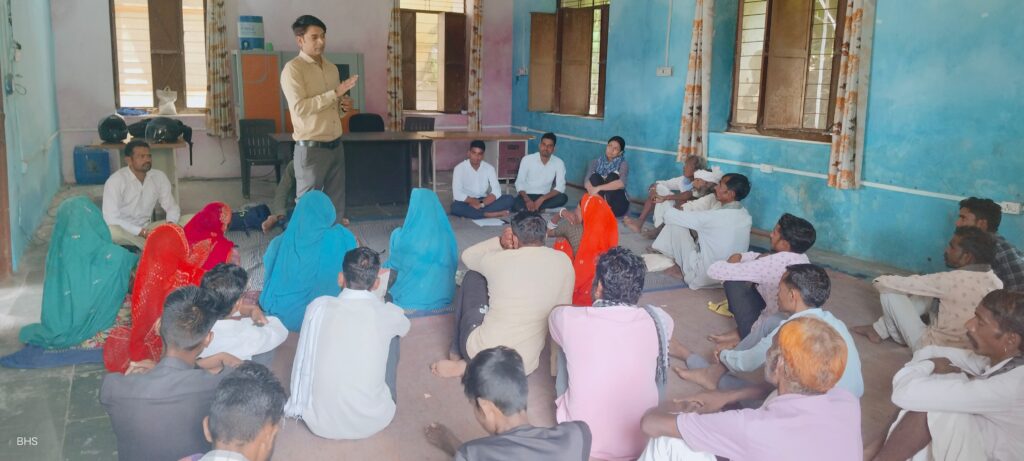
For many people in our communities in rural South Rajasthan, a diagnosis of tuberculosis is not just a health event, it is the tipping point at which already fragile livelihood and social systems begin to unravel. In southern Rajasthan, this reality is shaping how care needs to be understood and delivered.
Over the past two years, we have progressively integrated mental healthcare with care of people affected with TB. This approach emerged from what we were seeing every day at our clinics -patients were not only dealing with the physical burden of TB, but also with fear, stigma, financial stress, and isolation. The diagnosis of TB acts as the final nail in already fragile livelihood and social systems, which begin to break down when a person is no longer able to continue even the informal and hazardous work, that has so far kept them afloat.
 Many people did not speak about these concerns, yet they, deeply shaped how people engaged with and responded to treatment. In response, we began incorporating mental health assessments into routine TB care, creating space for conversations that go beyond symptoms. These interactions often reveal the larger context of people’s lives, limited livelihood opportunities, exploitative labor conditions, substance use, gender-based violence, and chronic poverty, all of which influence both distress and recovery. We found that more than half of TB patients reported feeling moderate/severe distress or had a common mental disorder. Women reported even higher feelings of distress. Over time, we have seen that when these concerns are acknowledged, patients feel supported through the process and are better able to continue treatment
Central to this approach has been the role of Mental Health Associates—community-based providers trained to deliver basic mental health care through a task-sharing model. This enables early identification of distress and sustained psychosocial support, while grounding care within the social context of people’s lives. It also challenges the notion that mental healthcare must remain specialist-driven, demonstrating that community-based systems can play a critical role in bridging this gap.
Interventions using simple tools like Psychological First Aid, Behavioral Activation and Problem Solving go a long way in making a safe space for people where they can talk about their worries freely and seek support. Another area of the mental healthcare is enabling people to connect with employable skills training which opens opportunities for safe and dignified work.
Looking at the example of R, a 36-year-old patient who had discontinued TB treatment returned to clinic with recurring symptoms. Alongside restarting medication, a mental health assessment revealed significant distress, including thoughts of self-harm. Through regular follow-ups, counselling, and support around treatment adherence, his condition improved. not only did he resume treatment consistently, but his distress reduced significantly over time, and he no longer reported suicidal thoughts
This story and our overall experience suggests that integrating mental health into TB care is not about adding another layer of services, but about changing how care is understood and delivered. When we begin to engage with people as individuals shaped by their social realities, rather than as patients defined only by disease, care becomes more responsive, more humane, and ultimately more effective.
Written by Pratishtha Executive – Mental Health